Japan · Kagoshima · Regional heritage food
Akumaki — Bamboo-Leaf Sticky Rice Cake
Akumaki (灰汁巻き) is a traditional Kagoshima specialty made by soaking glutinous rice in alkaline liquid, wrapping it in bamboo leaves and simmering it for hours. The rice transforms into a firm, translucent amber cake, often eaten with sweetened kinako.
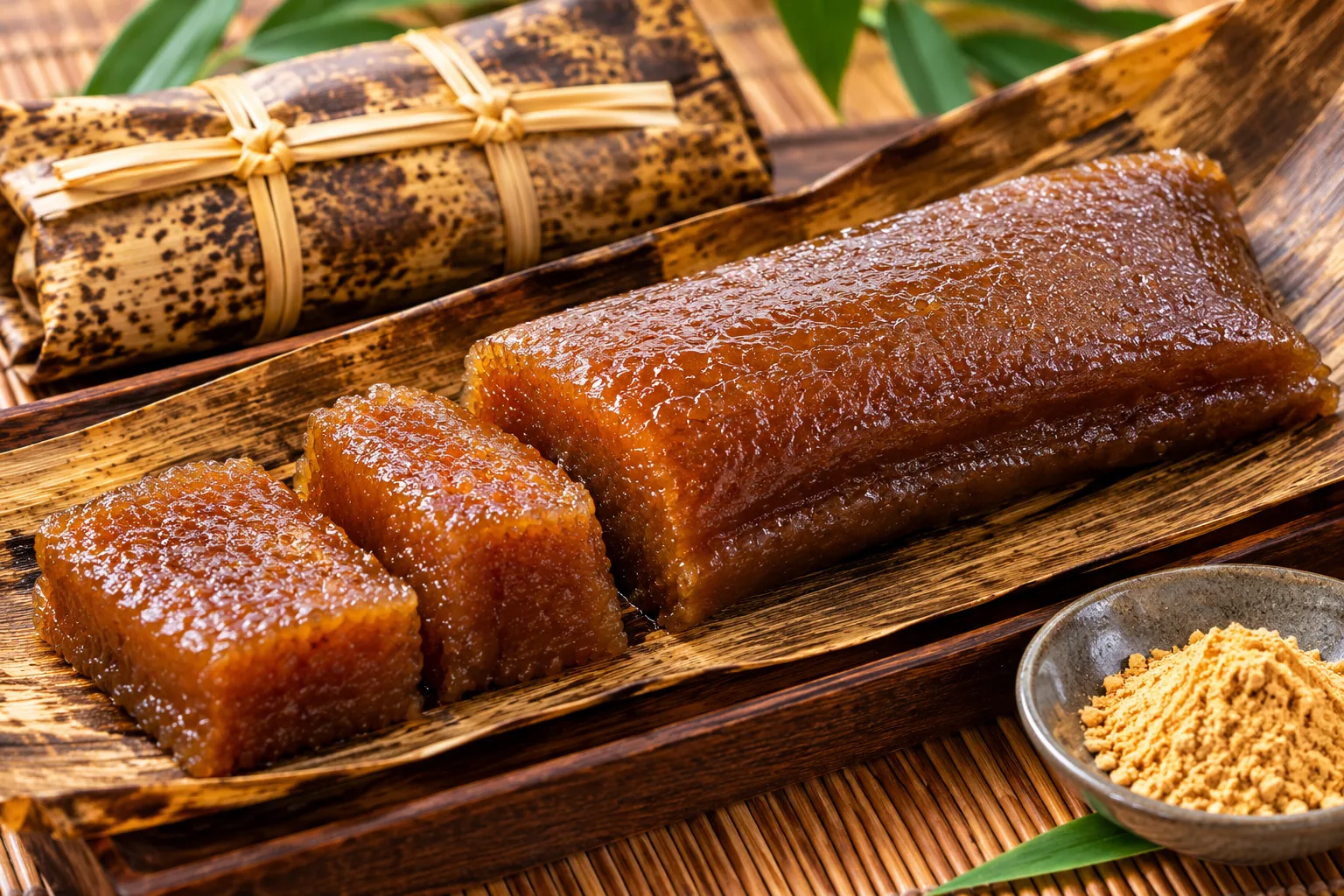
Illustrative AI-generated image. Traditional method overview, not an independently kitchen-tested or fully standardized formula; alkaline concentration, soaking and cooking time depend on the food-grade preparation used.
Ingredients
- 500 g (about 2¾ cups) Japanese glutinous rice (mochigome)
- Food-grade akumaki alkaline soaking liquid (aku), prepared according to a trusted food-product supplier’s instructions; quantity sufficient to fully cover the rice
- 4–6 large dried bamboo leaves suitable for food wrapping, plus extras in case of tears
- Food-safe kitchen twine or bamboo-leaf ties
- Water for rinsing and boiling
- For serving: 4 tbsp kinako (roasted soybean flour)
- 2 tbsp sugar, or to taste
- A small pinch of salt
Traditional-style method
- Rinse the glutinous rice gently until the water is mostly clear. Drain well. Prepare the food-grade akumaki alkaline soaking liquid exactly as instructed by its manufacturer or an established regional recipe; do not improvise a concentration.
- Soak the rice in the prepared alkaline liquid for the period specified by the product or trusted recipe. Traditional methods often use an overnight soak. Drain according to the chosen instructions.
- Soften the food-safe bamboo leaves in warm water until flexible, then rinse and pat dry. Check that none have cracks or sharp edges.
- Overlap bamboo leaves to form a long packet. Add a portion of drained rice, leaving ample room for the grains to swell. Fold the leaves around the rice to make a snug but not overly tight parcel, then secure with food-safe ties.
- Place the packets in a large pot and fully submerge in water or the cooking liquid specified by the trusted akumaki preparation. Simmer gently for several hours, typically around 3–5 hours, replenishing hot water so the parcels remain submerged. Follow the exact method and timing for your prepared alkaline liquid.
- Carefully lift out the parcels and let cool until the sticky rice firms into a cohesive, amber-colored, jelly-like cake. Unwrap a test parcel to confirm the rice has completely transformed, with no hard uncooked center.
- Mix kinako, sugar and a pinch of salt. Slice the cooled akumaki with a lightly dampened knife or clean string, and serve with the sweetened kinako. Akumaki itself is typically mild rather than sweet.
Important: use only food-grade alkaline preparation
Akumaki's traditional alkaline liquid (aku) is associated with wood-ash processing. Do not use drain cleaner, industrial lye, unknown ash, or unverified homemade alkaline solutions. The alkaline strength matters to food safety and texture. Use only an established, food-grade akumaki preparation and follow a trusted supplier's specific dilution and soaking directions. Because those directions vary, this page does not provide an improvised alkaline concentration.
How to eat akumaki
Akumaki is typically mild and pleasantly chewy. Slice it and sprinkle with kinako mixed with sugar, or use another traditional sweet topping. It is especially associated with southern Kyushu and seasonal celebrations.
Helpful kitchen tools
As an Amazon Associate I earn from qualifying purchases.