Japan · Traditional sweets · Rice dumplings
Japanese Dango — Three Ways
Dango are soft, chewy Japanese rice-flour dumplings served on skewers. Make sweet-and-savory mitarashi dango with a glossy soy glaze, springtime pink-white-green hanami dango, or anko dango topped with sweet red bean paste.
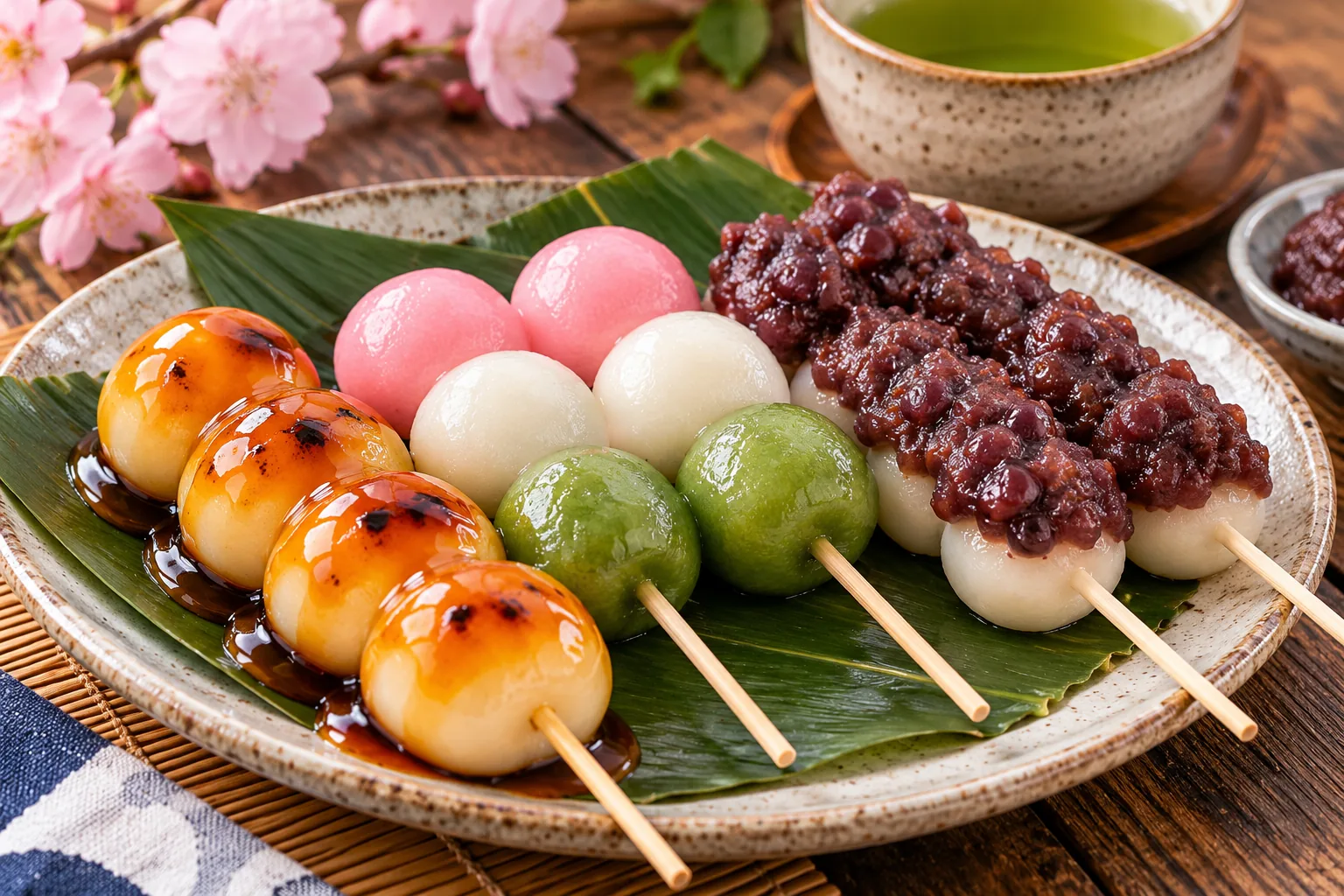
Illustrative AI-generated image. Traditional-inspired home recipe; flour ratios and regional preparations vary. Not independently kitchen-tested by Asian Table Atlas.
Ingredients
- 150 g (about 1¼ cups) joshinko (Japanese non-glutinous rice flour)
- 150 g (about 1¼ cups) shiratamako (Japanese glutinous rice flour)
- 220–260 ml warm water, added gradually
- 1–2 tbsp sugar for the dough (optional)
- A small pinch of salt
- A few drops of food-grade pink coloring or a little beet powder, for hanami dango
- ½–1 tsp matcha powder, for green hanami dango
- For mitarashi glaze: 3 tbsp soy sauce, 4 tbsp sugar, 3 tbsp mirin, 100 ml water and 1 tbsp cornstarch
- For anko dango: 150–200 g prepared sweet red bean paste (anko)
- 12–16 short bamboo skewers, soaked in water before grilling
How to make dango
- Combine joshinko, shiratamako, optional sugar and salt in a mixing bowl. Add warm water little by little, kneading until the dough feels smooth and soft like an earlobe. The exact amount depends on the flour brands.
- Divide dough into roughly 36 small balls, about 2–2.5 cm across. For hanami dango, divide some dough into three portions: leave one white, tint one pink and knead matcha into the third.
- Bring a wide pot of water to a gentle boil. Add dumplings in batches, stirring gently so they do not stick. When they float, cook 2–3 minutes longer to ensure the centers are cooked.
- Transfer the cooked dango to a bowl of cold water to cool briefly, then drain thoroughly. Thread three balls per skewer, using pink-white-green for hanami dango.
- For mitarashi glaze, whisk soy sauce, sugar, mirin, water and cornstarch in a small saucepan. Heat while stirring until glossy and thick enough to coat a spoon.
- For grilled mitarashi dango, lightly toast plain skewered dango in a lightly oiled skillet or under a broiler until small golden spots appear. Brush generously with warm mitarashi glaze.
- For anko dango, spoon prepared sweet red bean paste over plain dango skewers. Serve hanami dango without glaze, or with a light sprinkle of sugar if preferred.
- Serve the same day for the best soft, chewy texture. Because dango is sticky and round, cut it into small pieces for young children and anyone at risk of choking; supervise eating.
Three dango styles
Mitarashi: plain dumplings, lightly toasted and brushed with glossy sweet soy sauce. Hanami: three colors—pink, white and green—often enjoyed during cherry-blossom season. Anko: plain rice dumplings topped with sweet azuki bean paste.
Tips for soft, chewy dango
Add water gradually; the dough should hold together without becoming sticky. Avoid overcooking the dumplings and enjoy them fresh, since rice-flour sweets firm up as they sit.
Safety: Whole dango balls can be a choking hazard, particularly for small children and older adults. Cut into small pieces as appropriate and eat slowly.
Helpful kitchen tools
As an Amazon Associate I earn from qualifying purchases.