Philippines · Filipino · One-pot dinner
Filipino Chicken Adobo (Adobong Manok)
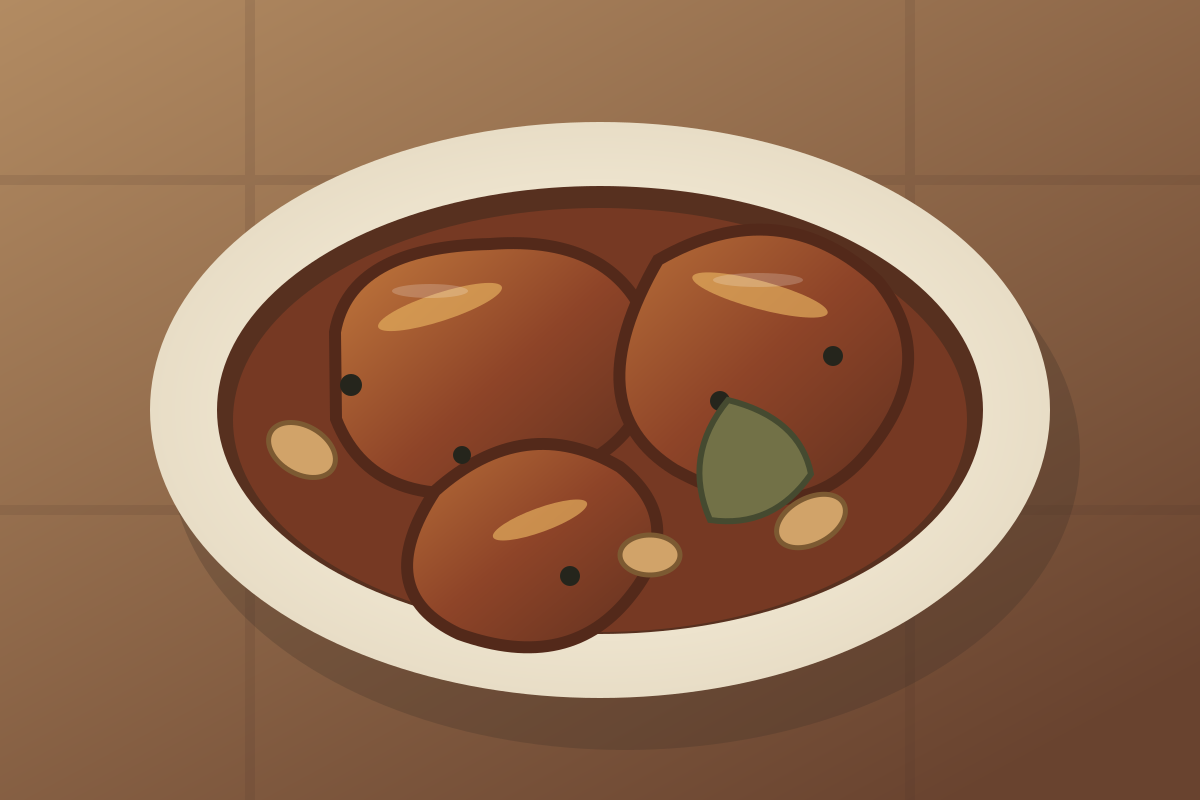
Chicken adobo is a beloved Filipino home-style dish: chicken slowly braised in vinegar, soy sauce, plenty of garlic, bay leaves and black pepper. This practical stovetop version browns the chicken first, then gently simmers it until tender and finishes with a glossy, savory-tangy sauce. Serve with plenty of steamed rice.
Ingredients
- 1 kg (2.2 lb) bone-in chicken thighs and drumsticks, preferably skin-on
- 1 tbsp (15 ml) neutral cooking oil
- 10 garlic cloves, peeled and lightly smashed
- ⅓ cup (80 ml) reduced-sodium soy sauce (contains soy and usually wheat)
- ½ cup (120 ml) Filipino cane vinegar, or plain white vinegar with 5% acidity
- ¾ cup (180 ml) water, plus a little more if needed
- 3 dried bay leaves
- 1 tsp whole black peppercorns, lightly crushed
- 1 tsp brown sugar (optional; add only after tasting the cooked sauce)
- Steamed jasmine rice, for serving
How to make Filipino chicken adobo
- Pat the chicken dry with paper towels; do not rinse raw poultry. Heat the oil in a wide, heavy pot over medium-high heat. Brown the pieces in batches, skin-side down for about 5 minutes, then 2 minutes on the other side. Transfer to a clean plate. The chicken is not yet cooked through.
- Reduce heat to medium. Leave about 1 tbsp of fat in the pot. Add the smashed garlic and stir for 30–45 seconds until fragrant but not brown.
- Pour in the soy sauce, vinegar and water; add the bay leaves and peppercorns. Scrape up the browned bits. Bring to a steady boil and let the vinegar mixture bubble uncovered for 2 minutes, then reduce to a gentle simmer.
- Return the chicken and any juices to the pot, skin-side up. Partly cover and simmer gently for 30–35 minutes, turning once halfway through. Add a splash of water if the pot looks dry. Check the thickest piece away from the bone with a thermometer: it must reach at least 165°F (74°C). Cook longer if needed, until tender.
- Move the cooked chicken to a clean serving plate. Simmer the sauce uncovered for 5–10 minutes until it lightly coats a spoon. Taste: if too salty or sharp, add water 1 tbsp at a time; add the optional brown sugar only if you prefer a rounder flavor. Do not reduce the sauce until overly salty.
- Return the chicken to the pot for 1 minute to coat it in the sauce. Remove the bay leaves and serve hot with steamed jasmine rice.
Tips and substitutions
- Vinegar matters: Filipino cane vinegar is traditional in many households. Plain white vinegar at 5% acidity also works; avoid sweetened or flavored vinegars.
- Choose the right cut: Bone-in dark meat stays juicy during the braise. Skin-on pieces brown especially well.
- Control the sauce: Soy sauces vary in saltiness. Use reduced-sodium soy sauce and dilute with water before adding extra seasoning. For a looser sauce, skip some reduction.
- Allergens: Most soy sauces contain soy and wheat. For a wheat-free version, use a verified gluten-free tamari and check every label.
Food safety and storage
Keep raw chicken and its utensils separate from ready-to-eat food. Do not wash raw poultry. Cook chicken to at least 165°F (74°C) in the thickest part, away from bone. Refrigerate leftovers in shallow containers within 2 hours (1 hour above 90°F / 32°C), store at 40°F / 4°C or below, and eat within 3–4 days. Reheat to 165°F (74°C).
What to serve with chicken adobo
The bold adobo sauce is excellent with steamed rice and crisp cucumber. For more Southeast Asian dinner ideas, try Thai basil stir-fry or compare another savory braise, Vietnamese cá kho tộ. Browse all Asian recipes.
Frequently asked questions
Can I make chicken adobo without marinating?
Yes. This recipe builds flavor by browning chicken, then simmering it in the vinegar-soy braising liquid. Marinating is optional, not required.
Can I substitute white vinegar for cane vinegar?
Yes. Use plain white vinegar labeled 5% acidity. Start with the stated amount and adjust the cooked sauce with water if needed.
Research and safety references
Technique cross-checked with Filipino cooking sources; the wording, quantities and instructions here were independently composed.