Vietnam · Nam Vang / Phnom Penh influence · Slow-simmered noodles
Hủ Tiếu Nam Vang
A beloved Vietnamese take on Phnom Penh-style pork and shrimp noodles: clear pork-bone broth, tender sliced pork, shrimp, seasoned minced pork, quail eggs, garlic oil and fresh greens. Serve as a soup or with noodles dressed separately.
Home-style traditional-inspired recipe. The dish has Cambodian and Chinese influences, and toppings and noodle choices vary by family and region. This version has not been kitchen-tested by Asian Table Atlas.
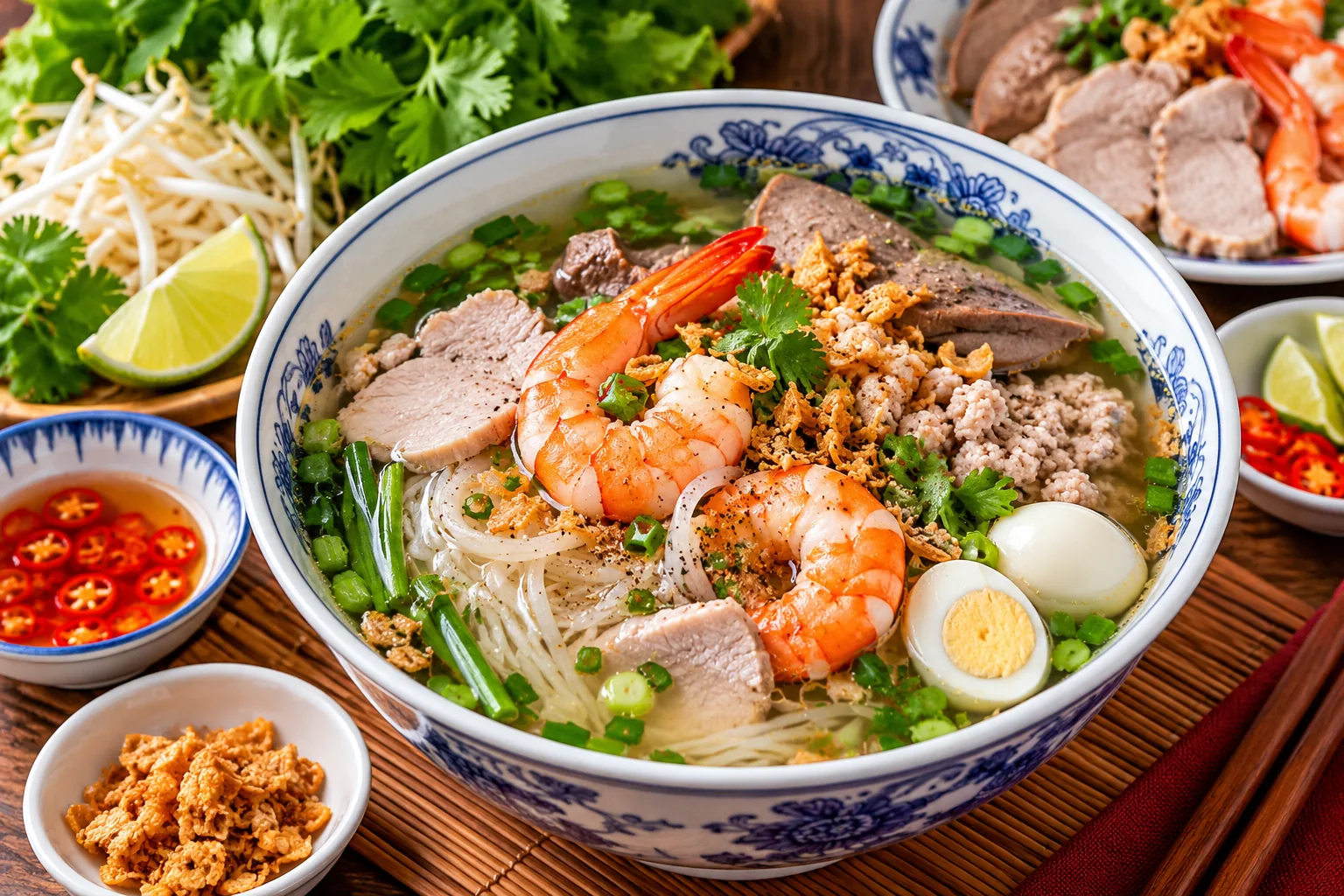
Illustrative AI-generated image.
Ingredients
- 1.5 kg (3.3 lb) pork neck or leg bones
- 450 g (1 lb) pork shoulder or lean pork, in one piece
- 5 liters (about 21 cups) water, plus extra for blanching
- 1 daikon radish (about 250 g), peeled and cut into large pieces
- 1 medium onion, halved
- 30 g (1 oz) dried shrimp, rinsed (optional but traditional in many versions)
- 1 tbsp rock sugar or regular sugar, or to taste
- 2–3 tbsp fish sauce, or to taste
- Salt and white pepper, to taste
- 450 g (1 lb) thin hủ tiếu rice noodles (fresh or dried)
- 300 g (10.5 oz) medium shrimp, peeled and deveined
- 250 g (9 oz) ground pork
- 12 quail eggs, boiled and peeled
- 3 tbsp neutral oil
- 6 garlic cloves, thinly sliced or minced
- 2 tbsp oyster sauce
- 1 tbsp light soy sauce
- 1 tsp sugar, for the ground pork
- Bean sprouts, garlic chives, celery leaves or Chinese celery, scallions, lettuce, lime wedges and sliced fresh chili, for serving
- Optional: sliced pork liver, thoroughly cooked, and fried shallots
Step-by-step instructions
- Blanch the pork bones in boiling water for 8–10 minutes. Drain, rinse thoroughly and wash the pot to help keep the broth clear.
- Return bones to a clean stockpot with 5 liters fresh water. Add daikon, onion and optional dried shrimp. Bring to a gentle simmer, skimming foam. Avoid a rolling boil.
- After 45 minutes add the whole piece of pork shoulder. Simmer gently until cooked through and tender, about 45–75 minutes depending on thickness; remove, cool slightly and slice thinly. Continue simmering bones for a total of 3–4 hours, adding hot water as needed.
- Strain the broth. Season with rock sugar, fish sauce, salt and white pepper. Taste for a delicate savory-sweet balance; it should be lighter than the broth of bún bò Huế.
- While broth simmers, heat 2 tbsp oil in a small pan and fry the garlic over medium-low heat until golden; remove promptly to prevent bitterness. Reserve both garlic and fragrant oil.
- In the same pan, cook ground pork until no pink remains. Stir in oyster sauce, soy sauce, 1 tsp sugar and a pinch of white pepper. Cook until lightly caramelized and set aside.
- Poach shrimp in gently simmering broth until opaque and fully cooked, about 2–4 minutes depending on size. Cook quail eggs until firm, peel and halve. If using liver, cook it thoroughly separately.
- Cook or blanch hủ tiếu noodles according to package directions. Divide among six bowls; top with sliced pork, shrimp, ground pork, quail eggs, garlic, scallions and herbs. Ladle over piping-hot broth and serve with bean sprouts, lime and chili.
- For hủ tiếu khô (dry-style), toss drained noodles with a little garlic oil, light soy sauce and a spoonful of broth; arrange toppings on the noodles and serve the clear broth in separate bowls.
Soup vs. dry-style Hủ Tiếu
Hủ tiếu nước: noodles and toppings are served in a bowl filled with hot broth. Hủ tiếu khô: noodles are lightly dressed with seasoned sauce or garlic oil; the broth is served on the side. The same toppings can be used for both.
Tips for clear, flavorful broth
Blanch and rinse the bones, then maintain a gentle simmer. Remove the sliced-pork cut as soon as it becomes tender rather than leaving it for the full broth time. Dried shrimp and daikon can add savory sweetness; adjust fish sauce at the end.
Food safety: Cook pork, shrimp, eggs and any optional liver thoroughly; prevent raw-meat cross-contamination and refrigerate leftovers promptly.
Helpful kitchen tools
Optional equipment. As an Amazon Associate I earn from qualifying purchases.
- Large stockpot — for gently simmering pork bones.
- Fine-mesh strainer — for a clearer broth.
- Noodle bowls — for serving.