Japan · Donburi · Chicken and egg
Oyakodon — Japanese Chicken and Egg Rice Bowl
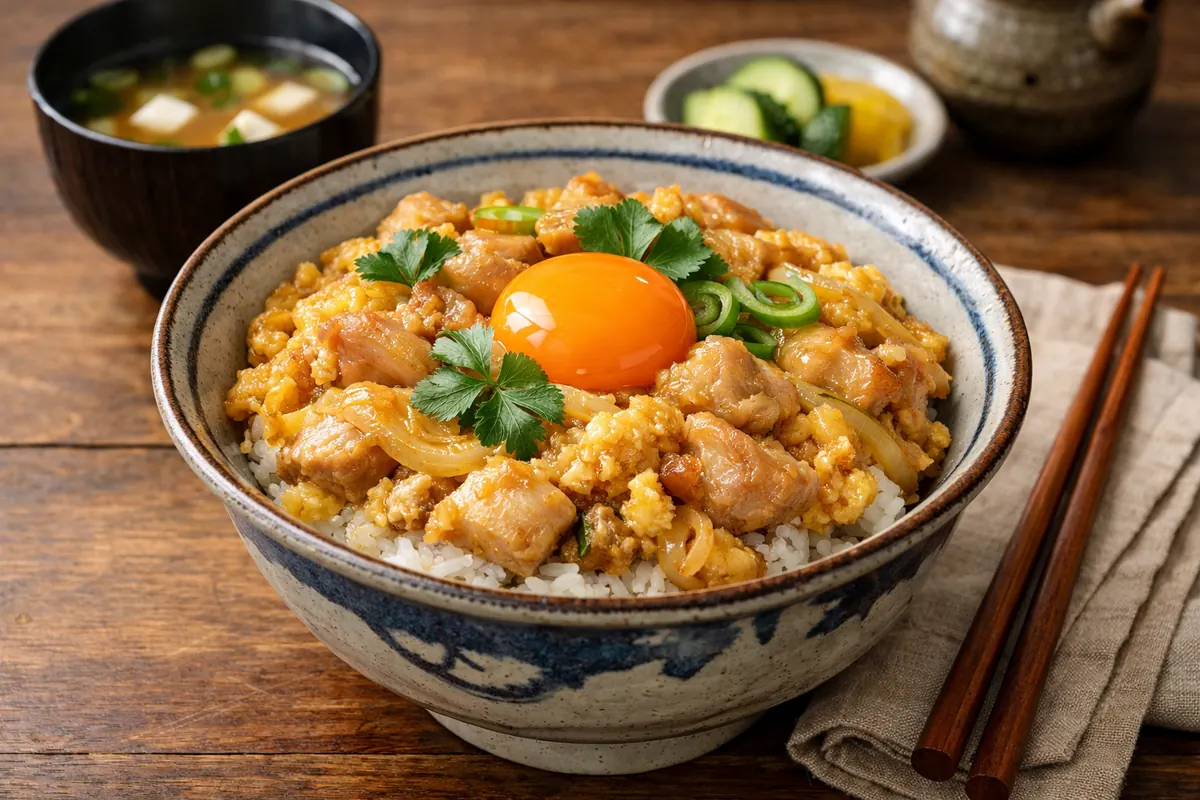
Oyakodon (親子丼) is a comforting Japanese rice bowl of tender chicken and onion simmered in dashi, soy sauce and mirin, finished with gently layered eggs. Its name means “parent and child bowl”—chicken and egg together. This version serves four and is cooked in two small batches for better texture.
Times assume rice is already cooked. Allow extra time if preparing rice from scratch.
Ingredients
- 600 g (1⅓ lb) boneless, skinless chicken thighs, cut into 2 cm (¾ in) pieces
- 1 medium yellow onion (about 180 g), thinly sliced
- 6 large eggs, lightly broken up with chopsticks (do not beat smooth)
- 240 ml (1 cup) prepared dashi stock (kombu and bonito or instant dashi)
- 3 tbsp (45 ml) Japanese soy sauce
- 3 tbsp (45 ml) mirin (sweet Japanese rice seasoning)
- 2 tsp (8 g) sugar
- 1 tbsp (15 ml) sake, optional
- 4 cups (about 600–700 g) hot cooked Japanese short-grain rice
- 2 scallions or a handful of mitsuba, sliced, to finish
- Shichimi togarashi (Japanese seven-spice), optional
How to make oyakodon
- Cook the short-grain rice in advance and keep it hot. Stir the dashi, soy sauce, mirin, sugar and optional sake together until the sugar dissolves.
- Slice the onion thinly and cut chicken into evenly sized 2 cm pieces. Keep the raw chicken and its cutting board separate from the ready-to-eat scallions and rice.
- Work in two batches so the chicken and eggs cook evenly. Put half the sliced onion and half the seasoned dashi in a 25–28 cm (10–11 in) skillet. Bring to a gentle simmer over medium heat.
- Add half the chicken (300 g) in a single layer. Simmer gently for 6–8 minutes, turning once, until the onion is tender and the thickest chicken piece reaches at least 74°C (165°F) on a food thermometer. Add a spoonful of water if the sauce reduces too quickly.
- Lightly break up 3 eggs, leaving streaks of white and yolk. Pour about two-thirds around the chicken and simmer until the whites begin to set; then pour in the remaining egg. Cover briefly and cook until the eggs are fully set and reach 71°C (160°F). For a softer egg texture, use pasteurized eggs and follow the package's safe-use directions.
- Divide half the hot rice between two bowls. Spoon the chicken, onion, eggs and some sauce over the rice; scatter over half the scallions or mitsuba.
- Repeat steps 3–6 with the remaining ingredients for two more bowls. Serve immediately, adding shichimi togarashi if desired.
Cooking tips and substitutions
Keep the eggs marbled: Stir just enough to break the yolks. Adding eggs in two pours creates the characteristic layered appearance.
Use dashi: Traditional bonito-and-kombu dashi adds savory depth; instant dashi works for a faster weeknight meal.
Choose the right pan: A 25–28 cm skillet is ideal for two portions. Avoid crowding four portions into a small skillet.
Allergens: Contains egg and soy; conventional soy sauce often contains wheat, and bonito-based dashi contains fish. Check product labels. Alcohol-containing mirin and optional sake are cooked but may not evaporate completely; choose alcohol-free mirin-style seasoning if needed.
Food safety and storage
Use a food thermometer to confirm the chicken reaches at least 165°F (74°C) before adding eggs. Cook ordinary shell eggs until fully set and at least 160°F (71°C); if choosing a softer finish, use pasteurized eggs. Refrigerate chicken, eggs and rice promptly in shallow, separate containers within 2 hours (1 hour above 90°F/32°C). Store at 40°F (4°C) or below, use within 3–4 days, and reheat leftovers to 165°F (74°C). For best egg texture, eat immediately.
Serving ideas and related recipes
Enjoy with miso soup and pickles. Explore more Japanese home cooking: chicken katsu, niku udon, or onigiri rice balls. Browse all Asian recipes.