Indonesia · Indonesian · Rice & egg dinner
Nasi Goreng Kampung — Indonesian Fried Rice with Sweet Soy Sauce
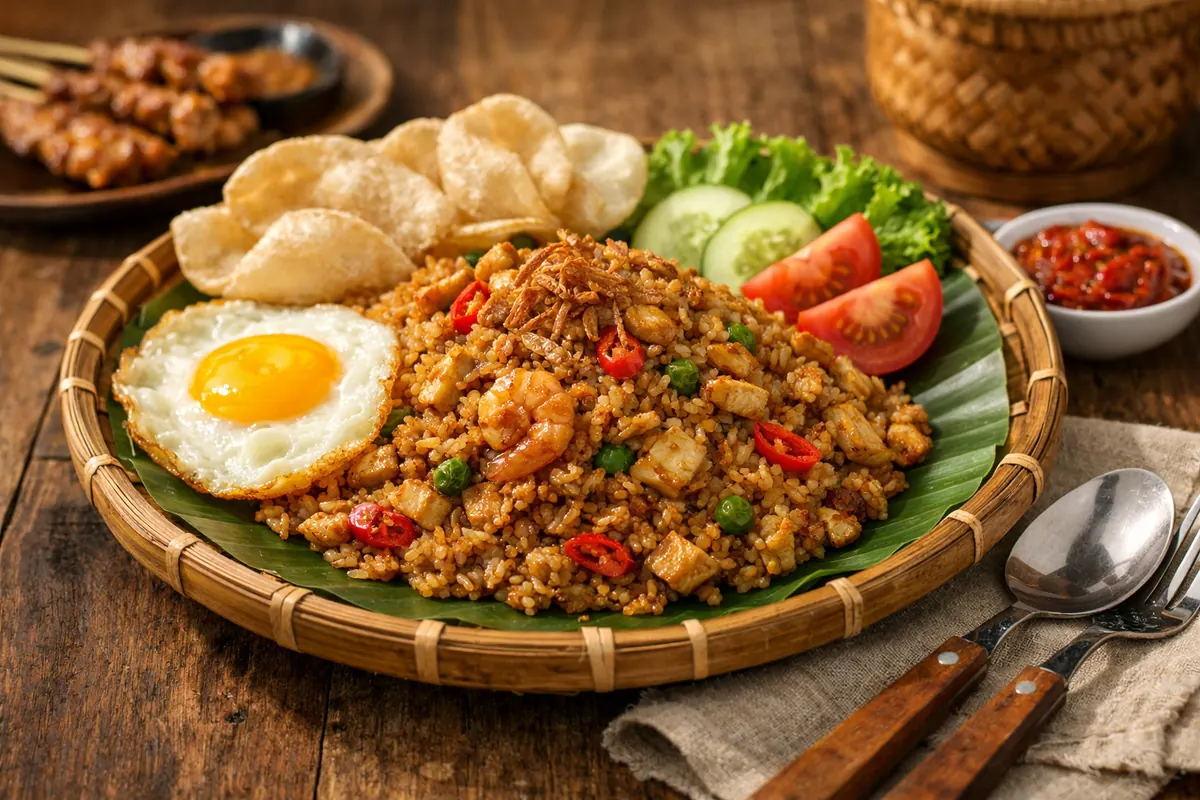
This Indonesian home-style fried rice starts with chilled rice and a fragrant paste of shallots, garlic, chili and toasted terasi (shrimp paste). Kecap manis gives the grains a savory-sweet glaze. Serve with a fully cooked fried egg, cucumber, tomato and crisp fried shallots. The 30-minute timing assumes the rice was cooked and safely refrigerated in advance.
Ingredients
- 400 g (about 2½ cups) cooked jasmine or long-grain rice, chilled overnight after prompt refrigeration
- 3 medium shallots (about 75 g), roughly chopped
- 3 garlic cloves, peeled
- 1–2 small red chilies, chopped (remove seeds for less heat)
- ½ tsp (about 3 g) Indonesian terasi (fermented shrimp paste), preferably toasted; optional
- 3 tbsp (45 ml) neutral oil, divided
- 2 tbsp (30 ml) Indonesian kecap manis (sweet soy sauce)
- 1 tsp (5 ml) light soy sauce, or to taste
- ¼ tsp ground white pepper
- 2 large eggs
- 1 scallion, thinly sliced
- ½ small cucumber (about 100 g), washed and sliced
- 1 small tomato (about 100 g), washed and cut into wedges
- 1 tbsp ready-made crispy fried shallots (bawang goreng), for serving
- Sambal, optional, to serve
How to make Indonesian nasi goreng
- Before cooking, check that the rice was refrigerated in a shallow container within 2 hours of cooking (within 1 hour above 90°F/32°C), held at 40°F/4°C or below and is no more than 3–4 days old. Discard rice left out overnight. Break up cold rice clumps with a clean spoon.
- Pound the shallots, garlic and chilies into a coarse paste with a mortar, or finely mince them together. If using terasi, crumble it into the mixture. Keep the sliced cucumber and tomato chilled until serving.
- Heat 1 tbsp oil in a large nonstick skillet over medium heat. Fry the eggs until whites and yolks are firm, about 3–5 minutes, flipping if necessary. Transfer to a clean plate and keep warm.
- Add the remaining 2 tbsp oil to a wide wok or skillet over medium-high heat. Stir-fry the shallot-chili paste for 2–3 minutes, stirring frequently until fragrant and the shallots have softened; do not burn the garlic.
- Add the cold rice. Spread it out, then toss and break up any remaining clumps for 3–4 minutes until evenly hot. Work in two batches if the pan is crowded.
- Pour in kecap manis and light soy sauce around the hot edge of the pan, add white pepper, and toss for another 1–2 minutes until the grains are evenly glazed and the reheated rice reaches 165°F (74°C) throughout. Taste and add a little more soy sauce only if needed.
- Divide the rice between two plates. Top each with a cooked egg, sliced scallion and fried shallots. Serve immediately with cucumber, tomato and optional sambal.
Cooking tips and substitutions
- Rice texture: Chilled, safely stored rice separates more easily. Freshly cooked rice can turn gummy; if using it, cool quickly in a shallow container in the refrigerator first.
- Terasi: Indonesian fermented shrimp paste adds a savory depth. Toast a solid piece briefly before using if the package recommends it. Omit it for a shrimp-free version; the flavor will be different.
- Kecap manis: This thick Indonesian sweet soy sauce is central to the dish. Ordinary soy sauce is much saltier and is not a 1:1 substitute.
- Allergens and variations: Eggs, shrimp (terasi), soy and potentially wheat (in soy sauces) are present. Check packaging. For a plant-based version, omit egg and shrimp paste and add sautéed mushrooms; this is a variation, not the traditional recipe.
Food safety and storage
Cooked rice can develop harmful bacterial growth if left warm for too long; reheating cannot reliably undo toxins already produced. Refrigerate cooked rice promptly in shallow containers, keep at or below 40°F (4°C), use within 3–4 days, and reheat to 165°F (74°C). Never use rice left at room temperature overnight. Cook eggs until both whites and yolks are firm. Refrigerate any finished leftovers within 2 hours (1 hour above 90°F/32°C) and avoid repeatedly cooling and reheating rice.
What to serve with nasi goreng
Serve with crisp cucumber and tomato to balance the sweet soy rice. For other rice dishes, explore Yangzhou fried rice and Japanese chicken-and-egg rice bowl. For a Southeast Asian main, try Filipino chicken adobo.
Frequently asked questions
Can I make nasi goreng without shrimp paste?
Yes. Omit terasi for a shrimp-free variation. Shallots, garlic, chili and kecap manis still provide plenty of flavor, though the result is less savory.
Why does nasi goreng use cold rice?
Cold rice is less moist and easier to separate, helping the grains fry instead of clumping. It must have been refrigerated promptly after cooking.
Research and food-safety references
Original quantities and wording, informed by Indonesian home-style nasi goreng methods. Not independently kitchen-tested.