Korea · Pajeon · Vegetarian appetizer
Pajeon — Crispy Korean Scallion Pancakes
Pajeon (파전) is a Korean savory pancake built around green onions (pa). This approachable version cooks two thin, crisp pancakes in a skillet, with a lightly seasoned wheat-and-rice-flour batter and a tangy soy-vinegar dipping sauce. Serve immediately while the edges are crunchy.
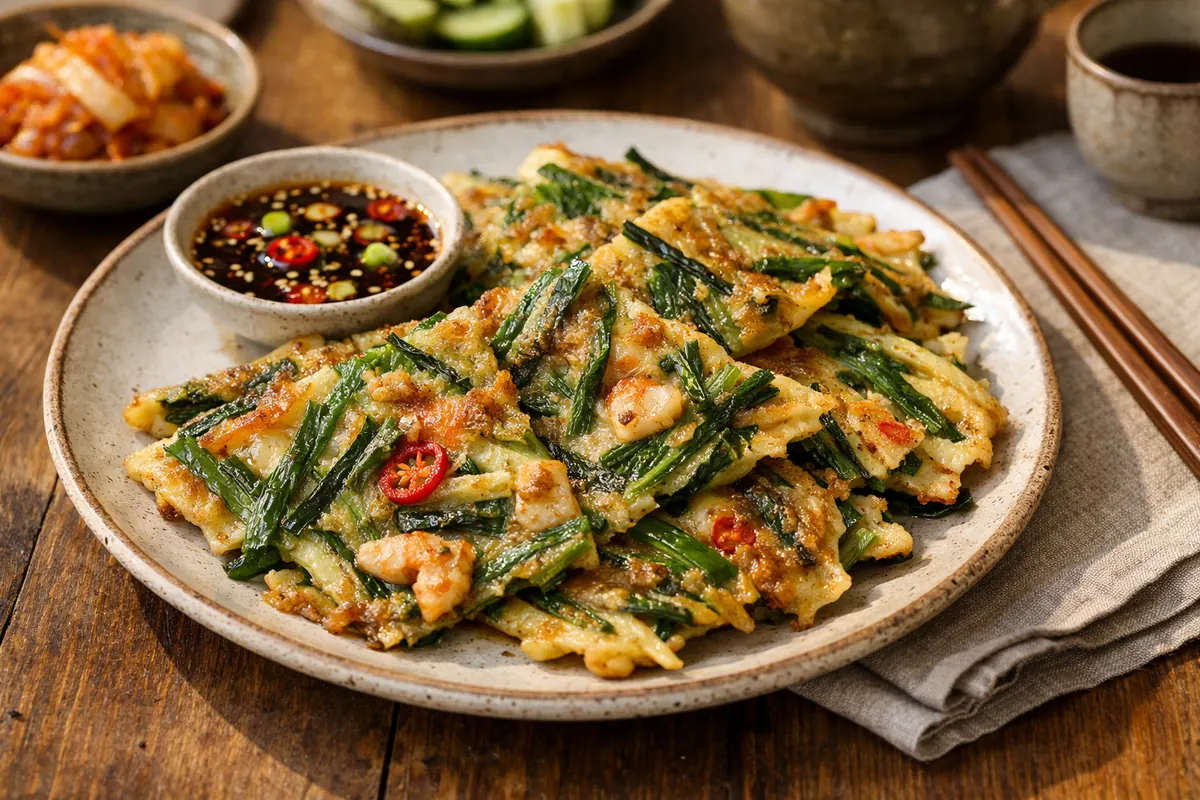
Makes 2 pancakes (8 wedges each), enough for 4 appetizer servings.
Ingredients
- 2 bunches scallions (about 200 g / 7 oz after trimming), washed and cut into 10–12 cm (4–5 in) lengths
- 120 g (1 cup) all-purpose wheat flour
- 30 g (¼ cup) non-glutinous rice flour (not sweet/glutinous rice flour)
- ½ tsp fine salt
- 1 large egg
- 240 ml (1 cup) ice-cold water
- 60 ml (4 tbsp) neutral frying oil, divided, plus a little more only if needed
- 2 tbsp (30 ml) soy sauce, for dipping sauce
- 1 tbsp (15 ml) rice vinegar, for dipping sauce
- 1 tbsp (15 ml) water, for dipping sauce
- 1 tsp (4 g) sugar, for dipping sauce
- 1 tsp toasted sesame seeds and ½ tsp toasted sesame oil, for dipping sauce
- ¼ tsp gochugaru (Korean chili flakes), optional
How to make pajeon
- Wash the scallions carefully, drain and pat dry. Trim roots and tough ends; cut into 10–12 cm lengths. Split unusually thick white ends lengthwise so they cook evenly.
- Make the dipping sauce: stir soy sauce, rice vinegar, 1 tbsp water, sugar, sesame seeds, sesame oil and optional gochugaru until the sugar dissolves. Set aside.
- Whisk wheat flour, rice flour and salt in a bowl. Beat the egg lightly with the ice-cold water, then add to the flour. Stir just until combined; a few small lumps are fine. Divide batter mentally into two portions and use promptly.
- Heat a 24–26 cm (9½–10 in) nonstick or well-seasoned skillet over medium-high heat. Add 1½ tbsp oil. Spread roughly one-quarter of the total batter thinly across the pan, arrange half the scallions in a mostly single layer, then drizzle another quarter of the batter over them to hold them together.
- Cook for about 4–5 minutes until the underside is deeply golden and the pancake releases easily. Gently flip with a wide spatula; add the remaining ½ tbsp oil for this pancake around the edges. Cook another 3–4 minutes, pressing lightly, until both sides are crisp and the center is fully cooked. Because the batter contains egg, verify 160°F (71°C) in the thickest center when possible; there should be no wet batter.
- Transfer to a rack or board, not a covered plate, so steam does not soften the crust. Repeat with the remaining batter, scallions and 2 tbsp oil to make the second pancake. Adjust the heat if the exterior browns before the center cooks.
- Cut each pancake into 8 wedges. Serve immediately with the dipping sauce on the side.
Cooking tips and variations
- Extra crisp: Keep the water icy, avoid overmixing, spread the batter thinly and leave space in the pan. A brief rest on a wire rack helps preserve the crust.
- Rice flour: Use ordinary non-glutinous rice flour. You may replace it with 30 g cornstarch for a different but similarly crisp finish.
- Variations: Add a few thin carrot matchsticks or sliced fresh chili, but keep scallions dominant. Seafood pajeon (haemul pajeon) requires different cooking and seafood safety checks.
- Allergens: Contains wheat, egg, soy and sesame; regular soy sauce often contains wheat. Check packaged ingredient labels. This is not gluten-free.
Food safety and storage
Wash produce and utensils before cooking. The egg-containing batter must be cooked through; egg dishes should reach 160°F (71°C). Refrigerate leftovers in shallow containers within 2 hours (within 1 hour above 90°F/32°C), keep at or below 40°F (4°C), and eat within 3–4 days. Reheat leftovers thoroughly to 165°F (74°C), ideally in a skillet or oven to regain crispness. Refrigerate dipping sauce separately if saved.
Serving ideas and related recipes
Serve as a snack or alongside kimchi jjigae, bibimbap or Korean cucumber salad. Browse more Asian recipes.